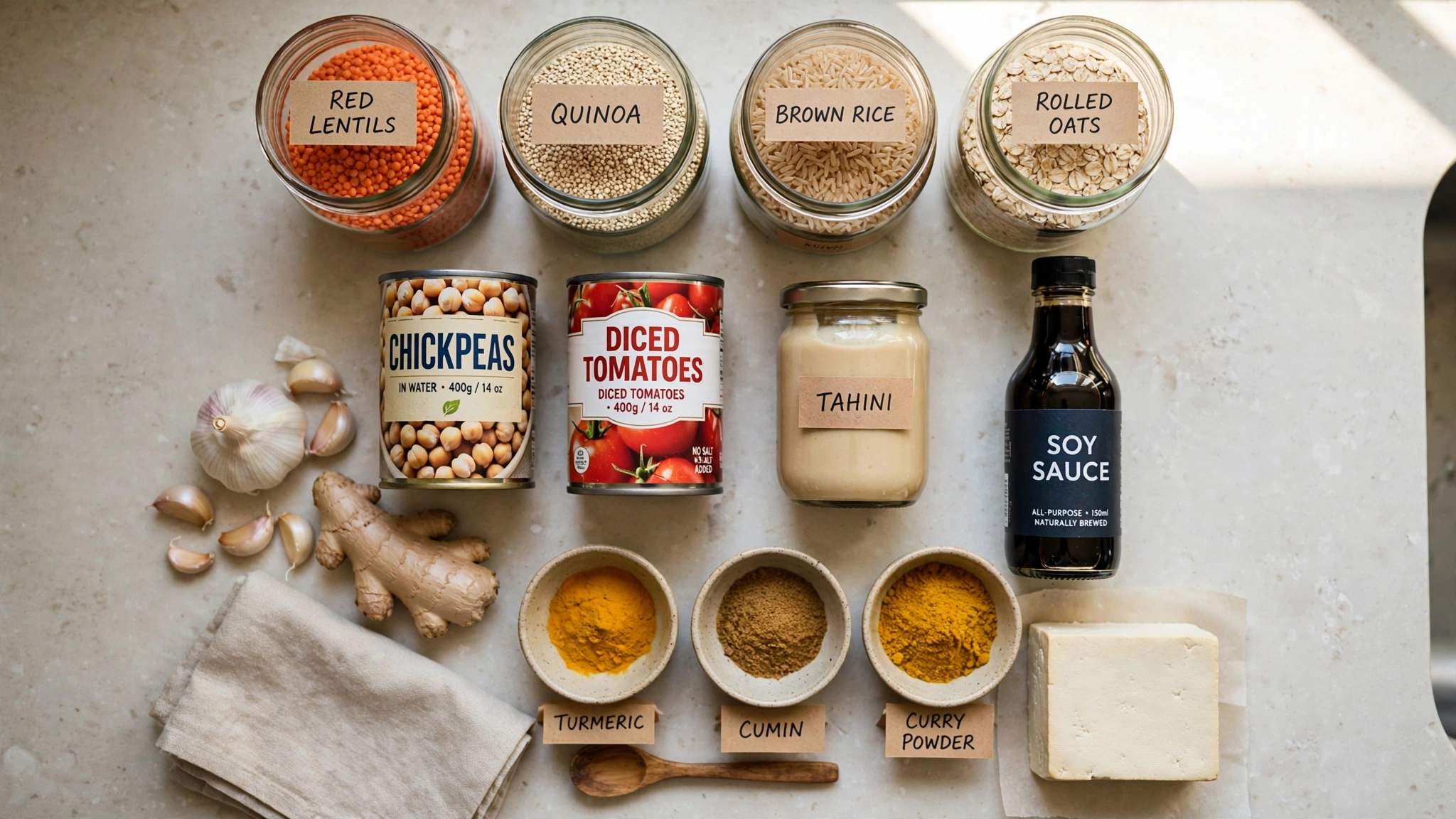
The hardest part of cooking plant-based meals is rarely the cooking. It is standing in the kitchen at 6 p.m. with a half-empty fridge and no idea what to make. A small, well-chosen pantry fixes most of that.
This guide lists what to buy first, why each group earns its shelf space, and how the items come together in real GreenLife recipes. Everything below is plant-based, so you can shop without second-guessing.
Start with how you actually cook
You do not need to buy everything at once. Pick two or three recipes you want to make this week, buy what they need, and add staples gradually. The three recipes referenced in this guide, the Rainbow Buddha Bowl, the Hearty Lentil Curry, and the Vegetable Stir-Fry with Tofu, share many ingredients, so one shopping trip covers all of them.
Legumes and protein-rich plants
These are the center of most plant-based dinners.
- Red lentils. They soften as they simmer and form the base of the Hearty Lentil Curry.
- Canned or dried chickpeas. Canned chickpeas are the quick option. Drain them, toss them in olive oil, and roast them for the Buddha Bowl.
- Black beans, kidney beans, and pinto beans. Useful for soups, bowls, and chili-style dishes.
- Firm tofu. Press it to remove excess water, cube it, and brown it in a hot pan.
- Tempeh and edamame. Good for variety once you are comfortable with tofu.
Grains and starches
- Quinoa. Cooks in about 15 minutes and works as a bowl base.
- Brown or white rice. Serve the curry and stir-fry over it.
- Rolled oats. A simple breakfast base you can top with fruit and nuts.
- Whole wheat pasta or rice noodles. Check the label, since some pasta contains egg.
Sauces, oils, and flavor builders
These small items change a plate of plain vegetables into dinner.
- Tahini. Whisked with lemon juice, garlic, and a little water, it becomes the dressing in the Buddha Bowl.
- Soy sauce or tamari. The salty, savory base for the stir-fry sauce.
- Rice vinegar. Adds brightness to stir-fries.
- Olive oil and sesame oil. Olive oil for roasting, sesame oil for stir-frying and flavor.
- Coconut milk (canned). Gives the lentil curry its creamy body.
- Canned diced tomatoes and vegetable broth. Both go into the curry, and both are useful for soups and stews.
- Cornstarch. Thickens stir-fry sauce in seconds.
Spices
A short spice shelf covers many cuisines. Start with curry powder, cumin, turmeric, paprika, chili powder, dried oregano, black pepper, and salt. The Hearty Lentil Curry uses curry powder, cumin, and turmeric, so those three alone get you a warming dinner. Buy small amounts and replace them when the aroma fades.
Fresh produce to keep on hand
- Aromatics: garlic, ginger, and onions appear in all of the recipes above.
- Sturdy vegetables: carrots, broccoli, and bell peppers last several days in the fridge and roast or stir-fry well.
- Leafy greens: spinach, kale, or lettuce for bowls and salads.
- Avocados: buy a mix of ripe and firm ones.
- Lemons and limes: a squeeze of citrus finishes dressings and curries.
- Fresh herbs: cilantro, parsley, and basil add freshness at the end of cooking.
Freezer helpers
Frozen vegetables such as spinach, peas, corn, and mixed vegetables are a practical backup for busy weeks. Frozen fruit is useful for smoothies.
Read labels as you shop
Many packaged foods look plant-based but include milk, egg, or other animal-derived ingredients. Breads, pastas, crackers, and some sauces are common examples. Scan the ingredient list before you buy. Over time you will learn which brands you trust.
A first-trip shopping list
If you want a short list for your first trip, this covers all three recipes plus a few extras:
- Quinoa and rice
- Red lentils and canned chickpeas
- Firm tofu
- Canned coconut milk, canned diced tomatoes, and vegetable broth
- Tahini, soy sauce, rice vinegar, sesame oil, olive oil, and cornstarch
- Curry powder, cumin, and turmeric
- Garlic, ginger, and onions
- Broccoli, bell peppers, carrots, snap peas, and leafy greens
- Avocados, lemons, and limes
- Fresh cilantro and green onions
Plan, then shop
Browse the GreenLife recipes, choose a few to cook, and open the shopping section to build your list. Keep to the plant-based items in each category, and you will have a pantry that makes dinner feel manageable.